
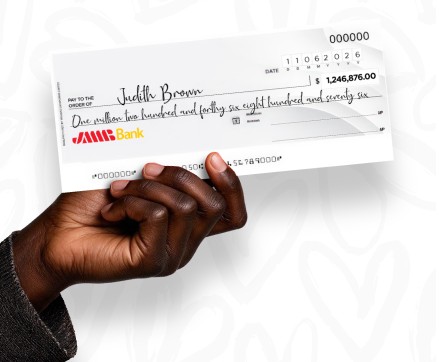
Jamaica Is Moving Away from Using Cheques
What Jamaica’s transition from cheques means for you
KEY CHANGE FROM 1 SEPTEMBER 2026
Jamaican-dollar cheques—including manager’s cheques—valued at J$1,000,000 or more will no longer be accepted or processed by banks. Cheques for less than J$1,000,000 remain subject to normal banking requirements until further notice.
Jamaica is moving beyond paper cheques through a phased transition to safer, faster and more efficient electronic payments. From 1 September 2026, banks will not accept or process Jamaican-dollar cheques—including personal, business and manager’s cheques—valued at J$1,000,000 or more, including exactly that amount. Lower-value cheques may continue during this phase; cash is not being eliminated, and foreign currency and overseas cheques are outside this scope. Anyone holding a cheque at or above the limit should deposit or encash it well before the deadline or arrange an electronic payment. Customers should consult JMMB Bank early about our digital payment options available on JMMB Moneyline. Businesses and organisations should identify cheque-dependent processes, verify beneficiaries, review limits and approvals, update workflows, train staff and test replacement methods. To manage fraud risk, verify beneficiary details and changed instructions through a trusted channel and retain transaction confirmations.
These FAQs provide general guidance. Payment channels, cut-off times, transaction limits, fees and documentation requirements vary. For a time-sensitive or high-value payment, please confirm the arrangements with us in advance.
Understanding the Transition
What does “cheque elimination” mean?
Cheque elimination is a phased transition away from paper cheques towards safer, faster and more efficient payment methods. It does not mean that every cheque will stop being accepted at once. Limits will be introduced in stages, with notice given before each stage takes effect.
Why is Jamaica moving away from using cheques?
Paper cheques are slow and costly to transport, process, clear and store. They are also exposed to risks such as forgery, alteration, duplication, theft and loss. Digital payment options can move funds more quickly and remove many paper-based risks, although clients must still protect themselves against scams and cyber fraud.
Are cheques being completely banned on 1 September 2026?
No. The first step affects Jamaican-dollar cheques valued at J$1,000,000 or more. Cheques below that amount may continue to be used after 1 September 2026, subject to normal banking rules, until a later phase is announced.
Who will be affected?
The transition affects individuals, businesses, public bodies, charities and other organisations that issue or receive Jamaican-dollar cheques. Anyone who regularly pays suppliers, salaries, benefits, refunds, dividends, professional fees, property-related amounts or other obligations by cheque should begin preparing now.
Will cash also be eliminated?
No. This initiative concerns paper cheques. It does not eliminate Jamaican banknotes and coins or require every payment to be made online.
What rules apply before September 1, 2026?
Existing processing rules remain in effect through August 31, 2026. Payments and transfers of J$1,000,000 or more should already be directed to an appropriate large-value channel, such as RTGS. Applicable fees and charges will be applied when the Automated Clearing House (ACH) is used contrary to the existing value threshold. Please visit our website for more information about all our applicable fees and charges.
Why did Jamaica not introduce cheque truncation instead?
Cheque truncation replaces the physical movement of a cheque with an electronic image. A feasibility review found that introducing truncation would require significant system and legal changes while retaining many cheque-related risks and supporting a payment method whose use is already declining. Jamaica therefore chose to focus investment on modern electronic payment options.
The J$1 Million Cheque Limit
What exactly changes on September 1, 2026?
From that date, banks will not accept or process any Jamaican-dollar cheque—including a personal, business or manager’s cheque—valued at J$1,000,000 or more. A client who presents such a cheque should expect that it will not be accepted and then returned.
Will there be further reductions in the cheque limit?
Yes, the move beyond cheques is intended to take place in stages. The amount and timing of each later stage will be communicated in advance. Clients and businesses should therefore begin reducing their reliance on cheques now rather than waiting for the final phase.
Does the limit include a cheque for exactly J$1,000,000?
Yes. The restriction applies to cheques valued at J$1,000,000 or more.
Can I continue to use a cheque for less than J$1,000,000?
Yes, during this phase. Cheques below J$1,000,000 will continue to be accepted, subject to your bank’s usual requirements and future phases of the transition.
Are manager’s cheques included?
Yes. Manager’s cheques are included because they remain paper instruments and can be forged, altered, duplicated or stolen. For a large payment, ask your bank about a suitable electronic transfer, such as Real Time Gross Settlement (RTGS).
Does the change apply to both personal and business cheques?
Yes. It applies to Jamaican-dollar cheques whether issued from a personal, business or other account, including manager’s cheques.
Does it apply to foreign currency or overseas cheques?
Not at this stage. The current initiative applies to Jamaican-dollar cheques. Local foreign-currency cheques and cheques drawn on overseas banks are outside this phase and remain subject to the accepting bank’s normal policies.
What should I do if I already have a cheque for J$1,000,000 or more?
Deposit or encash it before the deadline and allow enough time for JMMB Bank’s cut-off and processing requirements. Do not wait until the final day. If there is any doubt, contact the issuer and arrange for the cheque to be replaced with an appropriate electronic payment.
What if a cheque was dated before September 1, 2026, but is presented on or after that date?
The important date is when the cheque is presented for processing. A Jamaican-dollar cheque for J$1,000,000 or more presented on or after September 1, 2026, will not be accepted merely because it carries an earlier date.
What happens to a post-dated cheque for J$1,000,000 or more?
If it becomes payable and is presented on or after September 1, 2026, it will fall within the restriction. The payer and payee should arrange a replacement payment method before the due date.
What if I receive a cheque above the limit after the deadline?
Do not rely on it as completed payment. Ask the issuer to replace it with an electronic transfer or another method accepted by both parties. Jamaican banks will not process the cheque simply because it has already been issued.
Can I split one large payment into several smaller cheques?
Clients should not split a single large obligation into several cheques simply to avoid the limit. This defeats the purpose of the transition and may conflict with our policies or transaction-monitoring requirements. Instead, please use the easy and convenient digital payment options offered on JMMB Moneyline.
Can I still use the unused cheques in my cheque book?
For this phase, unused Jamaican-dollar cheques may still be used for amounts below J$1,000,000, subject to normal banking requirements.
Alternatives to Cheques
What can I use instead of a cheque?
Options include bank account transfers, ACH credit transfers, RTGS transfers, standing orders, direct debits, debit or prepaid cards, authorized digital or mobile wallets such as those supporting JAM-DEX, and approved cash-disbursement or remittance services. The best option depends on the amount, urgency, purpose and whether the recipient has a bank account.
What is ACH?
The Automated Clearing House (ACH) is an electronic system used for routine payments between accounts at participating financial institutions. ACH payments are processed in batches rather than one by one in real time. Please visit our website to get further information about processing time, cut-offs, transaction limits and fees.
What is RTGS?
Real Time Gross Settlement (RTGS) is the system used for large-value and time-critical Jamaican-dollar transfers between participating financial institutions. Payments are settled individually in real time when the required funds and payment information are available. Please visit our website to get further information about processing time, cut-offs, transaction limits and fees.
Which method should I use for a payment of J$1,000,000 or more?
For a large-value payment between different banks, RTGS is the principal alternative. A transfer between accounts at the same institution may be handled internally.
Must I have online banking to make an electronic transfer?
Not necessarily. A digital/electronic transfer may be initiated via JMMB Moneyline or at a branch. Some services require advance registration or an increased transaction limit, so please do set these up before the payment is due.
What if I send money to the wrong account?
Please contact us immediately and provide the transaction details. While we will do our best to assist you, unfortunately, digital/electronic payments cannot always be reversed, and recovery is not guaranteed. We, therefore, encourage you verify account information through a trusted channel before sending, especially when paying a new beneficiary or responding to changed banking instructions.
Access and Inclusion
What if the person I need to pay does not have a bank account?
Discuss alternatives with the recipient and us. Depending on availability, options may include a Simplified Due Diligence bank account, an authorized digital wallet, a prepaid card, or an approved cash-disbursement or remittance service through which the recipient can collect funds after identification checks.
Safety, Support and Future Changes
Where can I get help choosing a payment method?
Please visit our website or speak to a JMMB representative for information on our services, fees, transaction limits, cut-off times and registration requirements. General updates on the cheque transition will be available at beyondcheques.com.
What should I do if a payment is delayed, rejected or disputed?
Contact the financial institution or payment provider that handled the transaction and keep all receipts, reference numbers and correspondence. If the matter is not resolved, use the institution’s formal complaints process and ask for written guidance on any further escalation route.